
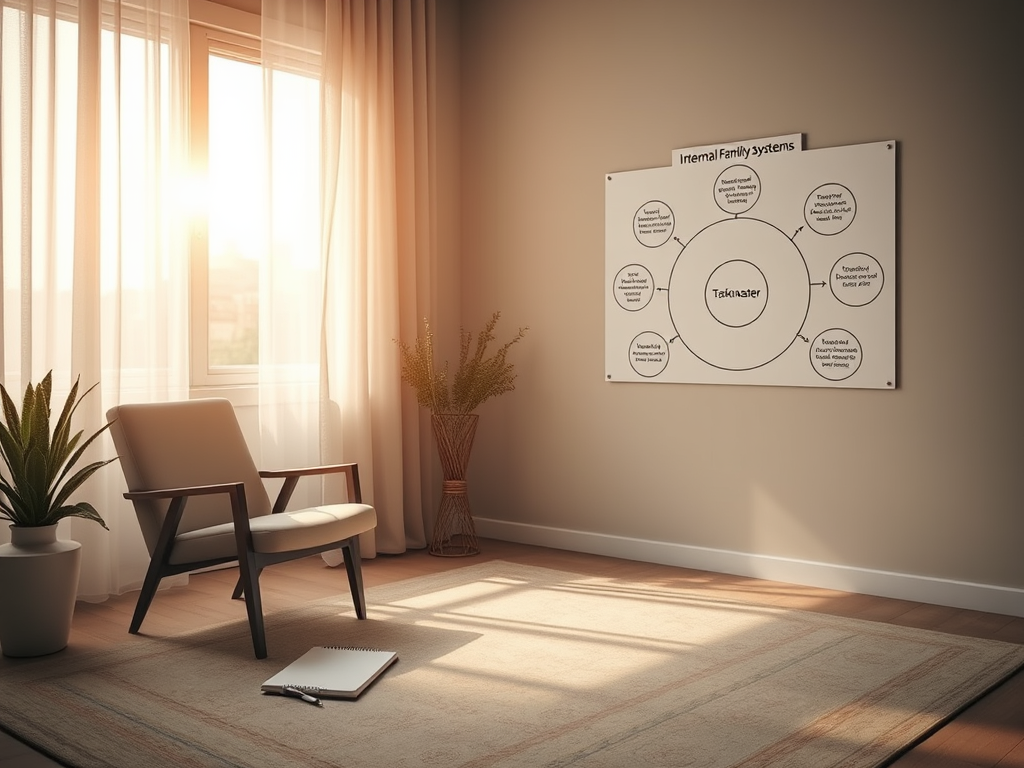
In my journey to recover from burnout, I’ve been doing a lot of deep introspection, and even some therapy. Recently, I had an experience that I believe is worth sharing. I tried a type of therapy called Internal Family Systems (IFS), and even though it was only one session, I got so much out of it. It was powerful, emotional, and incredibly eye-opening.
I think it’s something worth looking into for anyone who’s struggling with burnout, especially if, like me, you’ve found that burnout goes far beyond being “too busy.”
I want to share the experience and explain how therapy helped me understand my burnout.
How the Therapy Session Came About
I was in an Employee Assistance Program (EAP) therapy session, and we had been chatting about various things when my therapist asked me what I wanted to focus on in the last half-hour of the session.
I didn’t have to think long before responding: I wanted to know how to let go of the constant feeling of panic I’ve been experiencing, even on “easy” days.
This feeling of urgency wasn’t new – it had been building slowly over the years. I had always thrived on being busy and getting things done, but what had once felt like motivation had transformed into something crippling. The feeling of urgency had reached a point where it never left me, even when there was no real rush.
On this particular day, for example, I didn’t have much to do. I could see the dishwasher door ajar, and I knew I needed to empty it. There was a load of washing to fold, and I needed to make my lunch and go to the supermarket. I had the entire day to do these things, and there was no deadline – but the feeling of urgency and panic that I had to get these things done as soon as possible pulsed through me anyway.
I told my therapist all of this, and that’s when she asked me to close my eyes and feel everything in the body… I had no idea what was coming, I thought she was going to try and get me to meditate – but I went with it. When after the session I asked “WOW! What was that!?!?” She told me it was Internal Family Systems (IFS) therapy.
It’s really powerful! This is what I learned.
The Taskmaster: My Relentless Inner Driver
In IFS therapy, you explore the different “parts” of yourself that make up your internal system. Each part has its own role to play – whether it’s protecting you, managing emotions, or holding past wounds. One of the parts I met in my session was my taskmaster – a part of me that has driven me to be productive, a perfectionist, and constantly in control.
For years, my taskmaster had been a relentless inner voice telling me:
You’re not doing enough.
If you slow down, everything will fall apart.
Rest is a sign of failure.
This part of me had driven much of my professional success, but it had also driven me to burnout – twice. No matter how much I accomplished, the taskmaster always demanded more. But in this session, I learned that this part wasn’t trying to hurt me. It was trying to protect me.
How My Taskmaster Was Born: The Role of Childhood Responsibility
Through the session, I connected the dots between my taskmaster and my past. When I was 13, my world was chaotic. My mother worked nights, leaving me to take care of my three younger siblings – a tiny baby, a toddler, and a slightly younger brother. But home wasn’t a safe, nurturing place. My stepfather was an alcoholic, and my slightly younger brother was aggressive and often tried to knock me down because I was known as “the responsible one”.
In that environment, I had no choice but to grow up fast. I was the one responsible for keeping things together, and my taskmaster emerged as the part of me that said:
You have to be perfect. You can’t slow down.
If you don’t stay in control, everything will fall apart.
This strategy worked – at least, in the sense that I survived. But as an adult, my taskmaster was still running the show, pushing me beyond my limits and making rest feel like a failure.
The Emotional Release: Connecting with My 13-Year-Old Self
During the session, my therapist guided me to connect with the part of me that was 13 years old. I pictured her vividly – overwhelmed, responsible for everyone else, and carrying more than any child should have to carry. She wasn’t allowed to rest or feel supported because no one else was stepping in to help.
When my therapist asked me to ask the taskmaster to “leave the room for a moment” I did so, with my eyes still closed. As I sat with that image of my 13-year-old self, I felt an overwhelming wave of emotion. I cried – not just for her exhaustion, but for the fact that she had to carry this burden alone. For the first time, I allowed myself to feel the sadness and fear that my taskmaster had been suppressing for years.
What I realised was that my taskmaster wasn’t the problem – it was a protector. It had been keeping me busy all these years to distract me from the emotional pain of feeling abandoned and unsupported. But in doing so, it was also keeping me stuck in burnout.
The Calm After the Storm
When the session ended, I felt different – calmer, lighter, and more present than I had in a long time. I got up, went to the kitchen, and started emptying the dishwasher. But instead of rushing through it, I felt an overwhelming sense of calm.
I folded the washing, and I really enjoyed it. I wasn’t thinking about what I needed to do next – I was simply present in the moment. But when I started chopping vegetables to make my lunch, I felt the familiar sense of urgency creeping back in. The taskmaster was whispering:
Hurry up. You need to finish this faster.
You have much more to do.
But this time, instead of letting it take over, I paused and said out loud to myself:
It’s ok. Don’t worry. We’ve got this.
Nothing’s going to happen.
I will take care of you.
And just like that, the urgency faded. I finished chopping the vegetables without panic, without pressure. I even did a few more household tasks that I hadn’t planned on doing and then went for a nice walk in the sun, so I was actually more productive without that sense of panic crippling me.
Burnout as a Deeper Issue
This session reinforced something I’ve come to believe: Burnout isn’t just about doing too much, it’s about what’s driving you to do too much. For me, the deeper driver wasn’t my workload. It was the unresolved emotional pain from my past. As long as my taskmaster kept me busy and striving for perfection, I didn’t have to sit with those feelings. But that avoidance came at a cost – burnout, exhaustion, and a constant sense of never being enough.
Reassigning the Taskmaster: Finding Balance
The session didn’t magically “cure” me, but it gave me clarity on what needs to change. I realised that my taskmaster wasn’t the enemy, it was a part of me that had been doing its best to protect me. But now, I don’t need it to work so hard. I can give it a new job.
I’ve reassigned my taskmaster as “The Balance Keeper.” Its new job is to help me recognise when I need rest, when to set boundaries, and when to focus on things that bring me joy instead of perfection.
It’s still a work in progress, and I’ll need to keep reading this back to myself every day to keep it front of mind – but I already feel a shift. When the old taskmaster voice tells me I should be doing more, I remind it that we’re safe now. I don’t need to panic, and I don’t have to overachieve to feel worthy. Rest is not failure.
My Takeaway: Healing Burnout Means Healing What’s Beneath It
This experience taught me that burnout recovery isn’t just about external changes, like managing workloads or practising self-care. It’s about going inward and healing the emotional wounds that drive us to overextend ourselves. For me, that meant connecting with the part of me that learned to equate productivity with survival and giving it permission to let go.
I never expected one session to have such an impact, but it did. And while I’m still on this journey, I feel hopeful. I’m learning to rest, to slow down, and to be kind to myself. And if old habits make that feel selfish, I can reframe it as being kind to my 13-year-old self. I’m learning that I don’t have to carry the weight of my past alone.
For Anyone Struggling with Burnout
If you resonate with this experience, I encourage you to explore what might be driving your own burnout. Is there a part of you, like my taskmaster, that’s working overtime to protect you from something deeper? If so, know that you’re not alone – and there’s a way to heal. Whether it’s through therapy, journaling, or quiet introspection, giving yourself the space to listen to your inner world can be incredibly powerful.
I’m still learning how to give my taskmaster a break.
Maybe it’s time for yours to take one too.


Join the Conversation